Mini-Splits · 7 min read
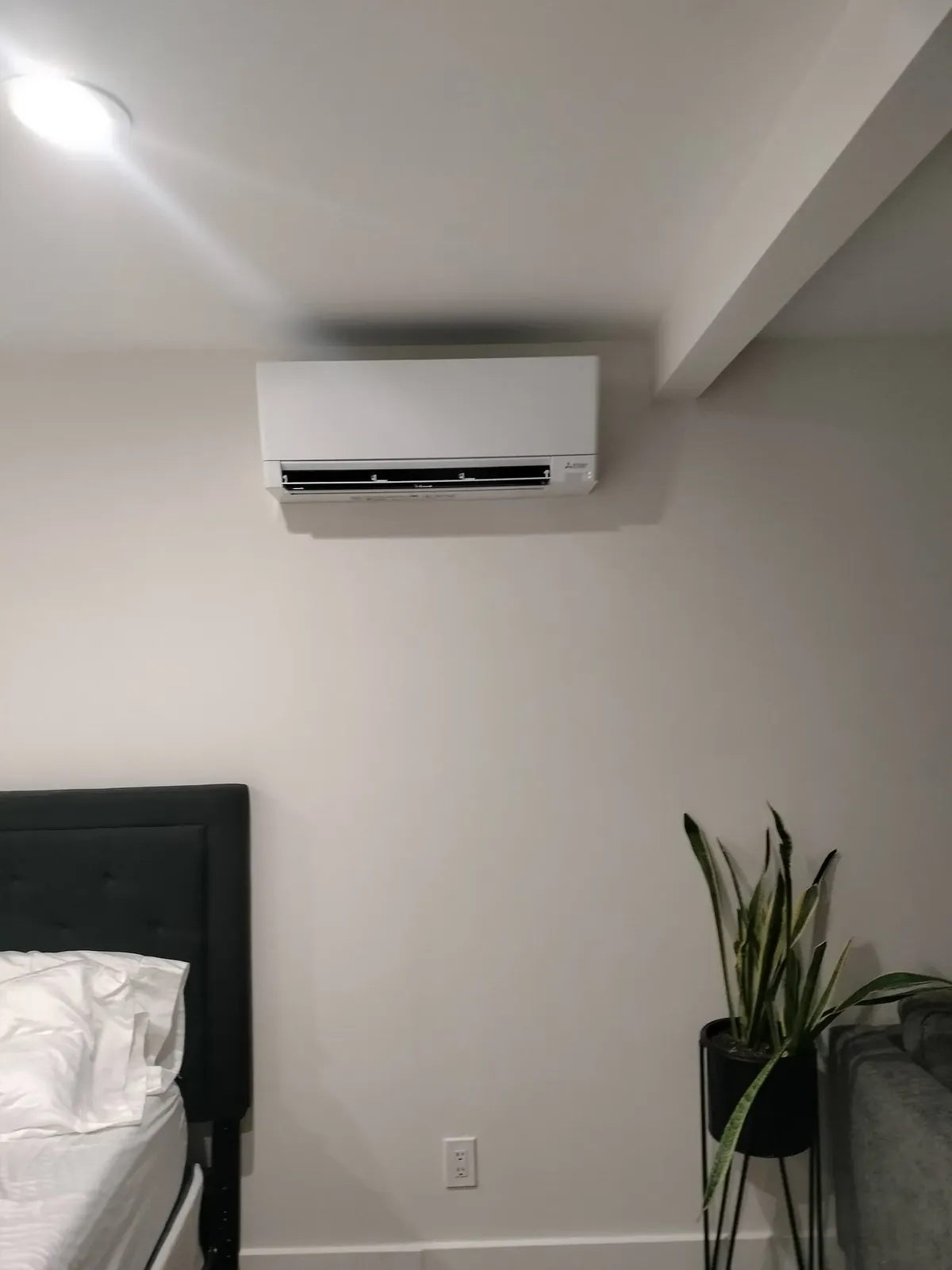
The homeowner met me at the door and pointed straight down the hall. "Every other room is fine. This back bedroom is the oven." It was a west-facing room in a Phoenix house, and by mid-afternoon the sun had been hammering that wall for hours. The central AC ran fine, but it couldn't push enough cool air that far, so we added a ductless mini-split, and a day later that bedroom held its temperature like the rest of the house.
I'm Alex Saenz, owner and lead tech at Desert Cool Mechanical (AZ ROC #343485, licensed, bonded, and insured). I've spent over 16 years on Phoenix HVAC, and mini-splits are one of the jobs we do most. If you have a garage, an addition, a casita, or one stubborn room that the rest of the house ignores, this is the post for you. Here is what a mini-split actually is, how we install one the right way, and what really drives the cost.
Almost every Phoenix home has a weak spot. A back bedroom at the far end of a long duct run. A converted garage that was never tied into the main system. An addition or a casita the original AC was never sized to cover. A home office over the garage that turns into a sweat box by noon.
The reason is usually simple. Your central system was sized with a Manual J load calculation (that's the math that matches AC capacity to a home's heat gain) for the original house. Add square footage, or ask it to fight a west wall in 110-plus degree heat, and the air just doesn't get there cold enough. Stretching the existing ducts often makes it worse, because you rob the rooms that already work. A garage is even tougher. They're usually uninsulated, the door is a giant heat sink, and tying a garage into your house air is against code in a lot of cases anyway.
That's the kind of problem a ductless mini-split was built to solve.
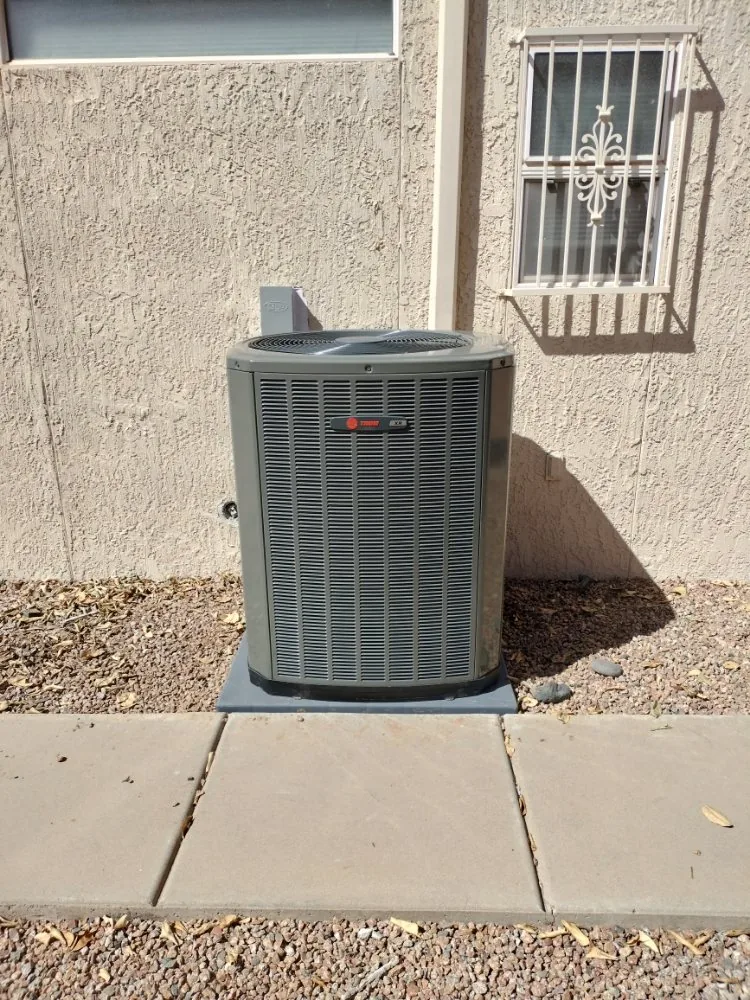
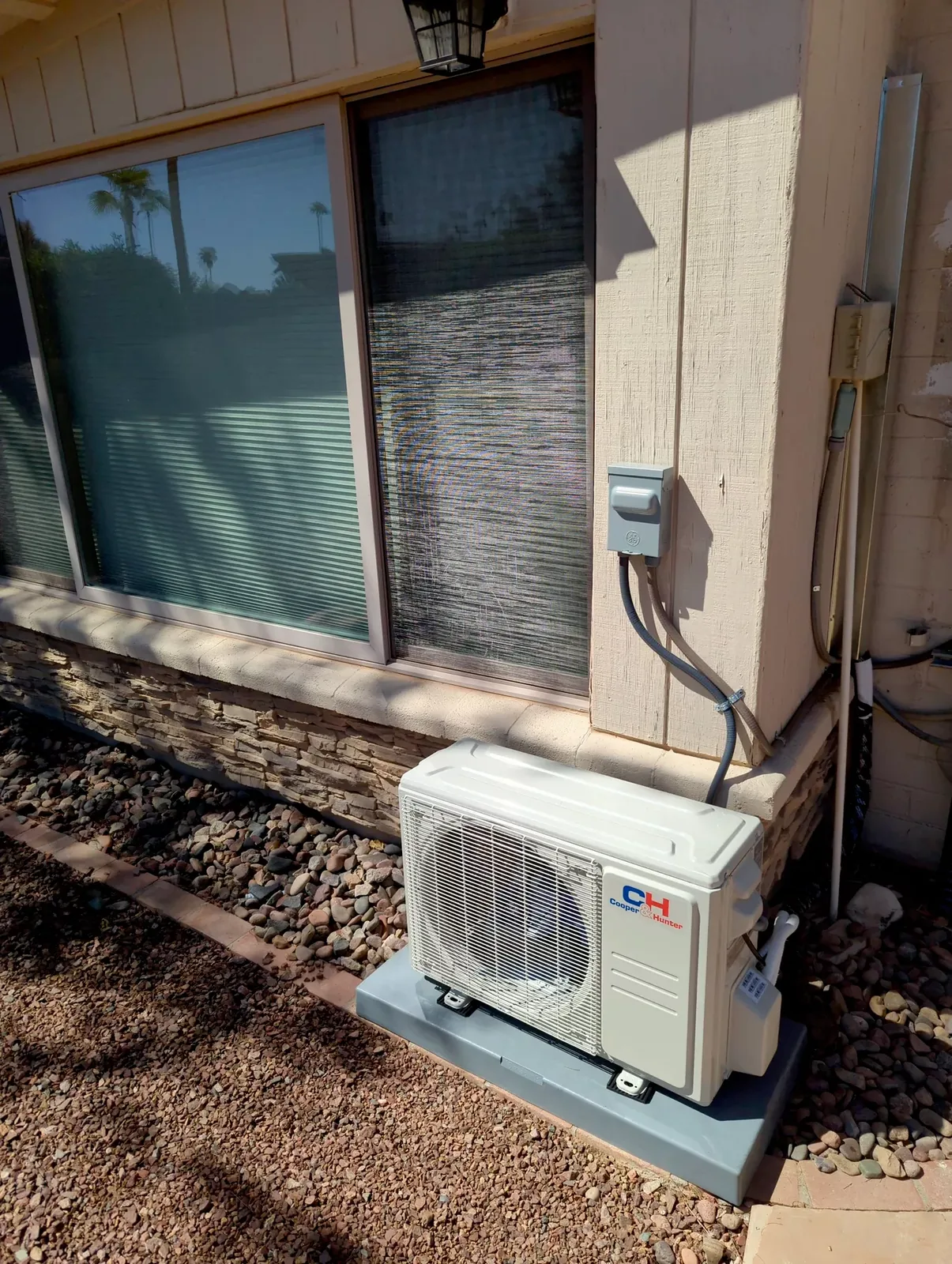
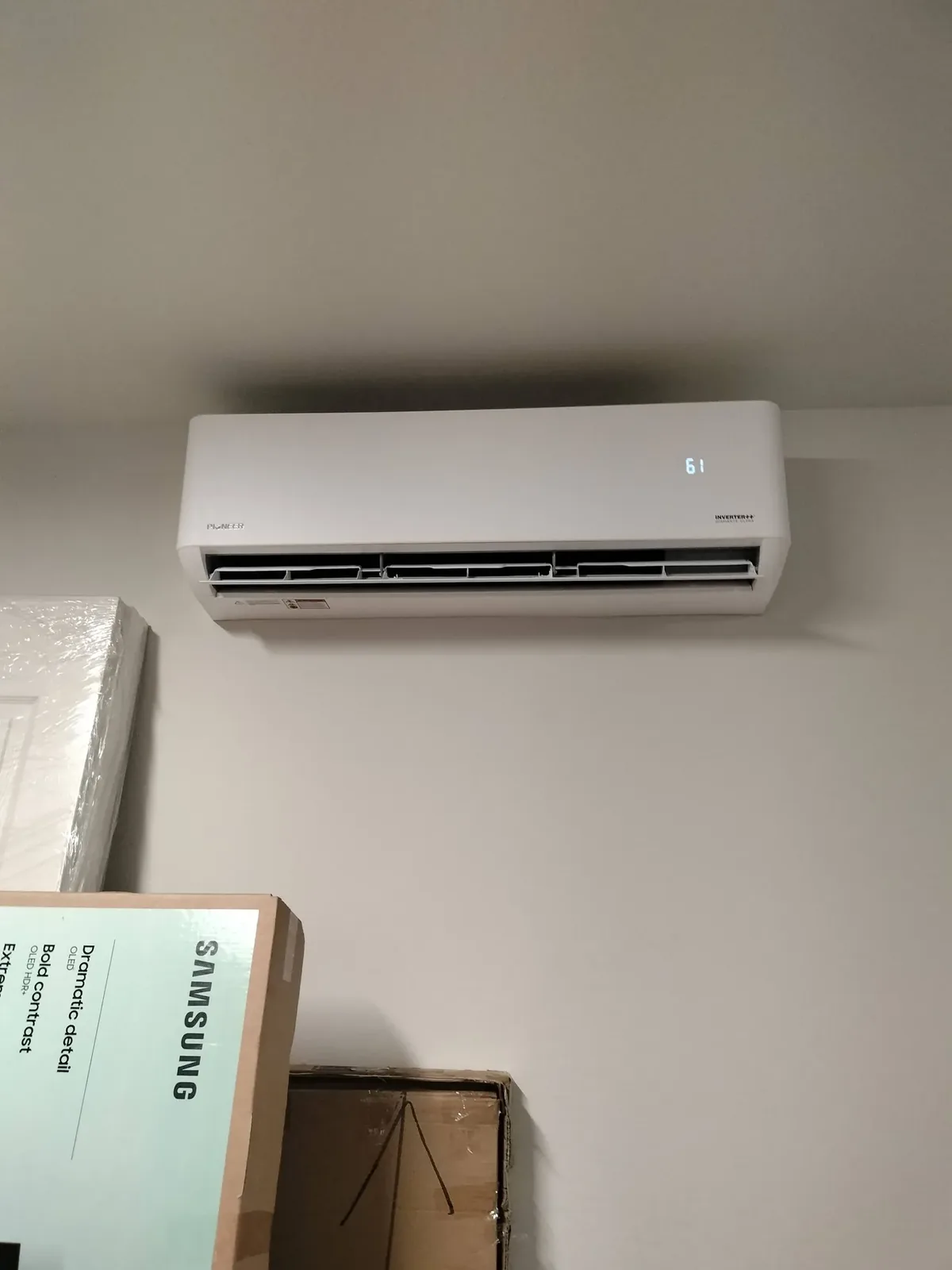
A mini-split is a small, efficient air conditioner and heater that cools one room or zone at a time, with no ductwork. It has two parts. An indoor unit, called an air handler or head, mounts on the wall and blows conditioned air right into the room. An outdoor unit, the condenser, sits on a pad or a wall bracket outside. The two are joined by a line set, which is a pair of insulated copper refrigerant lines plus a control wire and a condensate drain, all running through one small hole in the wall.
Because there's no duct, there's nothing to leak and no long run to lose cold air in a hot attic. The system is also an inverter heat pump. Inverter means the compressor ramps up and down instead of slamming on and off, so it sips power, runs quiet, and holds a steady temperature. Heat pump means it works in reverse in winter and heats the room too, which matters more than people think on a 38-degree Phoenix January night.
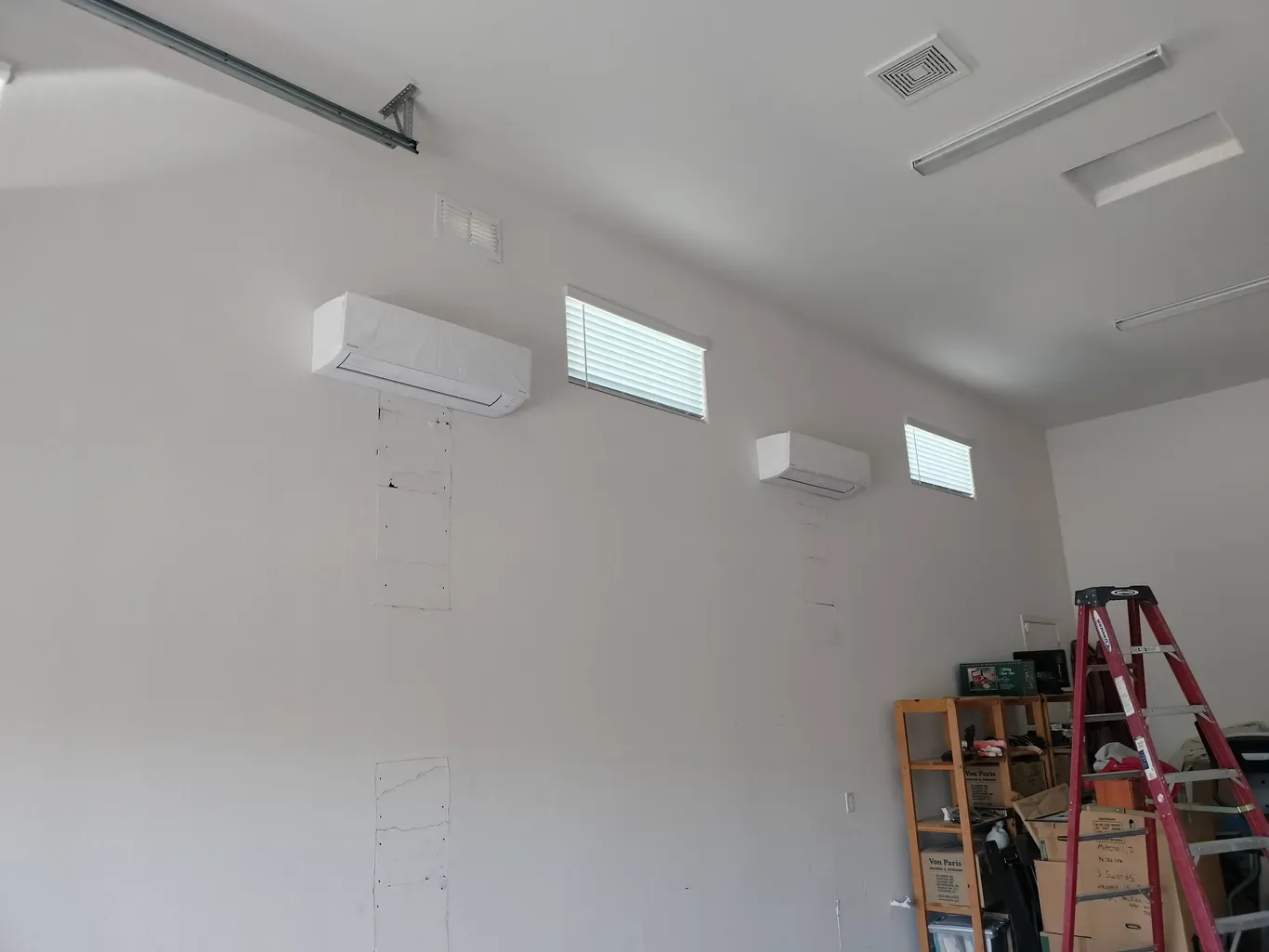
This is the first question I answer on every estimate. A single-zone system is one indoor head paired to one outdoor condenser. That's the classic fix for one room: a bedroom, an office, a small casita. A multi-zone system runs two or more indoor heads off a single outdoor condenser, with each head on its own remote and its own temperature. Multi-zone is how we cool a whole garage conversion, an addition with a couple of rooms, or several rooms of a house on their own settings.
More heads is not always better. A right-sized single zone runs more efficiently and costs less than an oversized multi-zone you don't need. We size it to the actual rooms, not to a sales pitch.
The list is long, but the pattern is the same. Anywhere the central system can't reach or shouldn't be stretched. Garages and garage conversions, where the heat load is brutal and ducting in is a non-starter. Room additions and casitas that were never on the original load calc. Hot west- or south-facing bedrooms. Home offices and bonus rooms over a garage. Sunrooms. And whole-home zoned comfort in houses with no ductwork at all, where mini-splits replace the central system room by room. If you want to see a few of these on real Phoenix homes, our project photo gallery has the indoor heads and outdoor condensers from jobs around the valley.
For the back-bedroom job that opened this post, here's the short version of what went in and how the day went. Every home is different, so treat this as a real example, not a quote.
A clean mini-split install is mostly about doing the boring steps correctly. Here's the sequence we follow.
1. Mount the indoor head. We level and anchor the wall bracket into solid framing, then set the air handler high on the wall where the airflow covers the room without blowing right on you.
2. Core the wall. We drill one clean, slightly downward-sloped hole through the wall for the line set. The slope matters, because that's how condensate (the water the coil pulls out of the air) drains out by gravity instead of pooling.
3. Set the outdoor condenser. The condenser goes on a level pad or a wall bracket, off the ground, with room for airflow around it. In Phoenix we keep it out of standing afternoon sun where we reasonably can.
4. Connect and torque the flares. The copper line set joins the units with flare fittings. We torque each flare to spec with a torque wrench. Over-tighten and you crack the flare, under-tighten and it leaks refrigerant in a year. This is where cheap installs fail.
5. Evacuate and pull a vacuum. We hook up a vacuum pump and a micron gauge and pull the lines down to around 500 microns. That removes air and moisture from the system. Skip a proper vacuum and you get moisture inside the lines, which kills capacity and shortens the life of the compressor.
6. Release the charge and run the electrical. We open the valves to release the factory refrigerant charge into the system, then a dedicated circuit and a disconnect box get wired in to code.
7. Commission and test. We run it in cool, run it in heat, confirm the temperature split at the head, and check that the condensate drains where it should with no leaks. Then we clean up, haul off the packaging, and walk you through the remote.
You can't see most of what makes a mini-split last, which is exactly why corners get cut. A real vacuum to around 500 microns, verified on a micron gauge, not "ran the pump for five minutes." Flares torqued to spec instead of cranked by feel. A line set that's insulated end to end and run inside the wall or in a clean cover, not draped across the stucco. Condensate that actually drains downhill. And the system sized to the room with a load calc, because an oversized mini-split short-cycles. It blasts cold, shuts off, and never runs long enough to pull humidity or hold a steady temperature. Right-sizing beats big every time. We wear booties inside, protect your floors, and haul the old window unit or space heater away when we leave.
We install Mitsubishi, Cooper&Hunter, Daikin, and Pioneer mini-splits, and we'll be straight with you about which fits your room and your budget.
What matters more than the badge is correct sizing and a clean install. A well-installed Pioneer beats a poorly-installed Mitsubishi every day of the week. New equipment is also moving from R-410A refrigerant to the newer A2L refrigerants like R-454B, so we'll make sure whatever we put in is current and serviceable down the road.
I won't quote a flat number online, because anyone who does is guessing. What I can do is tell you honestly what moves the price so there are no surprises at the estimate.
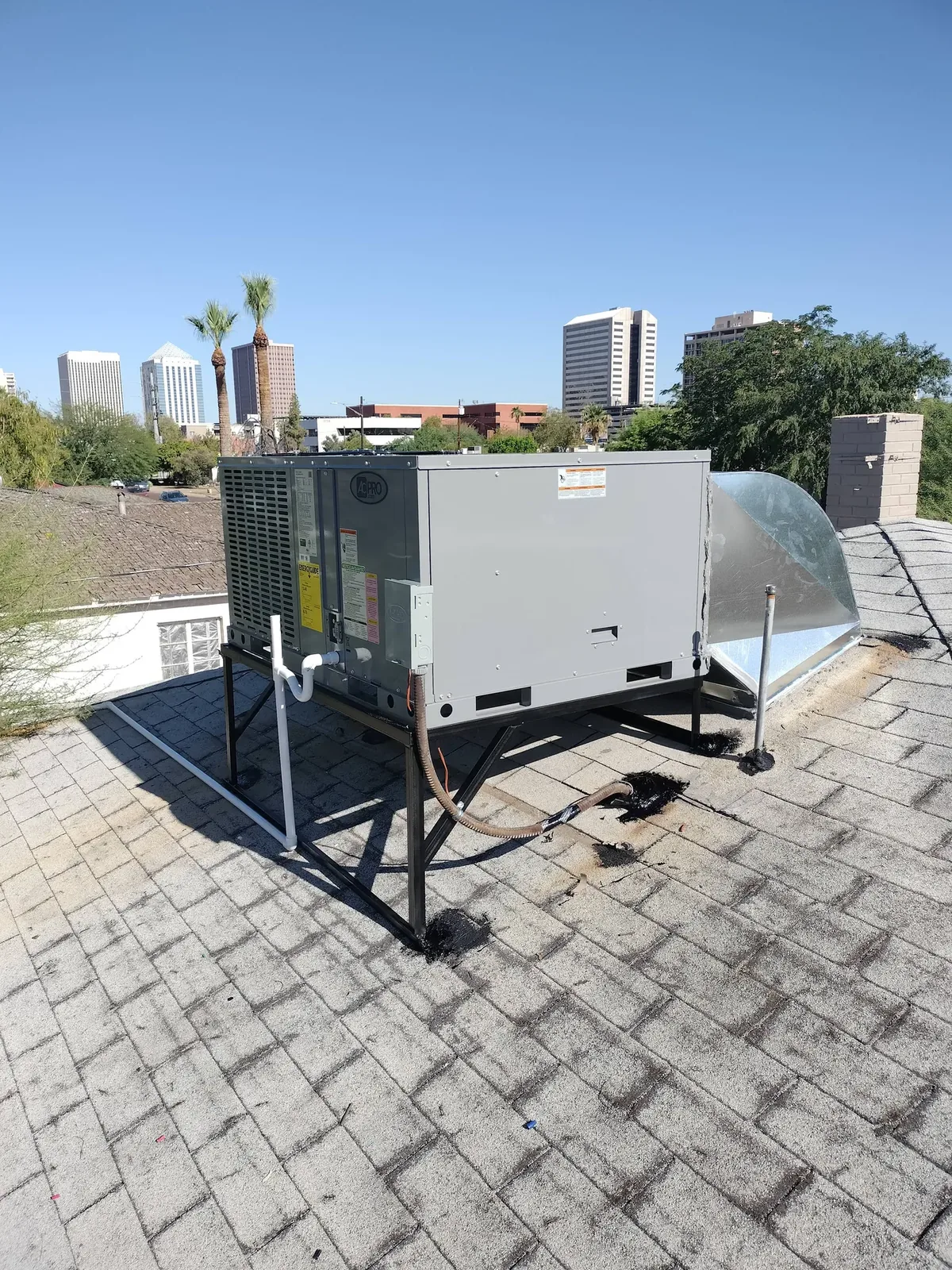
The honest move is a free in-home estimate where I size it properly and give you a real, written number. If you're also weighing a full central system, our writeups on a split-system AC replacement in Phoenix and a rooftop packaged unit replacement walk through how those compare.
If you've got a garage, an addition, a casita, or one room that's always too hot (or too cold in winter), a ductless mini-split is usually the cleanest, most efficient way to fix it without touching your central system. No ductwork, no attic, often done in a single day for a single zone, and quiet enough to forget it's there. Take a look at our full HVAC services to see how mini-splits fit alongside our central AC and heating work, browse a few real installs in the gallery, then reach out for a free estimate or call or text me directly at 480-853-6627. I'll size it right, give you an honest price, and tell you straight if a mini-split isn't the best move for your home.
Yes, as long as it's sized right. A garage is uninsulated and often west-facing, so the heat load is high. We do a load calc and pick a unit with enough BTU capacity to hold the space even on a 110-plus degree afternoon. An undersized unit will run nonstop and never catch up, which is why correct sizing matters more than brand.
Yes. A mini-split is an inverter heat pump, so it runs in reverse to heat the room in winter. On a cold desert night in the 30s or 40s, the same unit that cooled the room all summer keeps it warm, efficiently, with no separate heater needed.
A single-zone system, one indoor head and one outdoor condenser, is often a single day. Multi-zone systems with several heads take longer. Tricky electrical or a difficult wall route can add time, and we'll tell you the expected timeline at the estimate.
One room almost always means one head (single-zone). A garage conversion, an addition with a couple of rooms, or whole-home zoning usually means multi-zone, with one head per area off a shared outdoor condenser. We size it to the actual rooms. More heads than you need just costs more and runs less efficiently.
No. The inverter compressor ramps up and down instead of cycling hard on and off, so the indoor head runs quietly, often quieter than a window unit or a ceiling fan. They're a popular choice for bedrooms and offices for exactly that reason.
No, and that's the whole point. The system needs only a small hole through one exterior wall for the line set. There's no ductwork and no attic work, which is why a mini-split is the cleanest way to cool a room the central system can't reach.
Most mini-splits need a dedicated circuit run from your electrical panel and a disconnect box at the outdoor condenser, wired to code. How far that runs and whether your panel has open space affects the work involved, and we check both during the estimate.
For a permanent, efficient fix, a mini-split wins for most Phoenix homes. A window unit is cheaper up front but loud, less efficient, blocks a window, and struggles with extreme heat. Extending the central system often robs cooling from the rooms that already work and isn't always possible. A mini-split cools that one space cleanly, heats it in winter, and runs on its own thermostat.
Get a free, no-pressure estimate from a licensed local HVAC contractor. Call or text and we'll get you scheduled fast.