AC Replacement · 9 min read
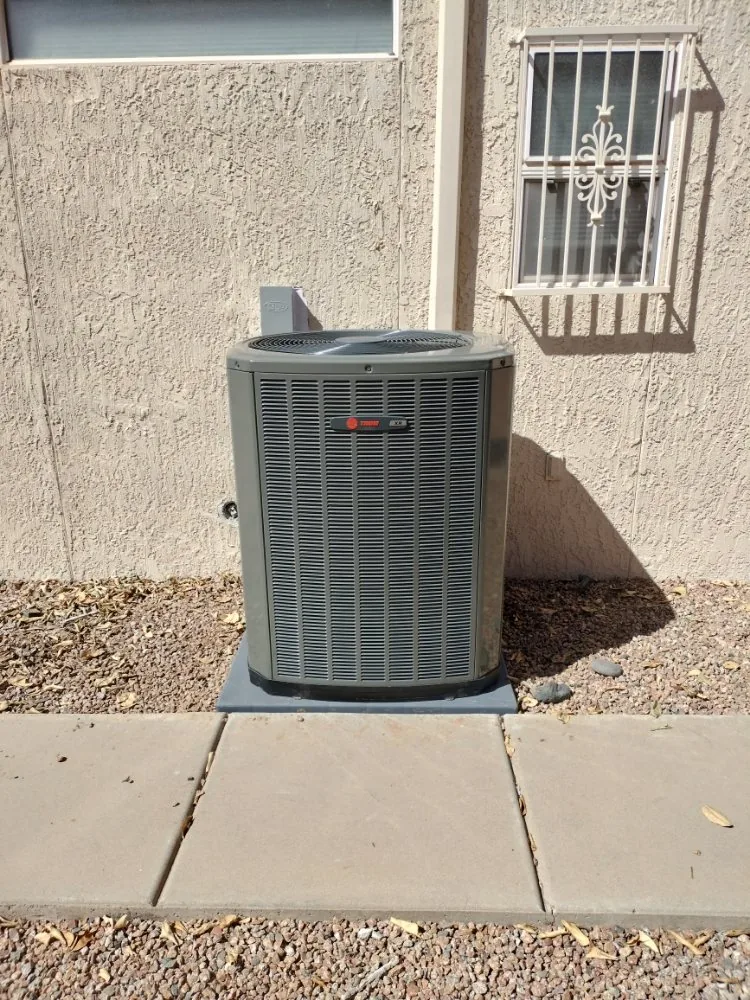
It was a little past two on a 112F Glendale afternoon when the call came in. The condenser out back was running, but the vents were blowing room-temperature air and the thermostat had crept up to 88 inside.
In a Phoenix summer that is not an inconvenience. It is a house heating up faster than a marginal system can fight it, and indoor heat here is a real health issue for kids, older folks, and pets. One of the clearest signs your AC is failing in Phoenix heat, and the reason replace versus repair becomes urgent, is exactly this: the unit runs and runs and still can't pull the house down to setpoint when the load peaks. This post walks through that one real Glendale replacement start to finish, and it lays out how to make the same call for your own home. We cover when a repair is the honest answer, when it's time for a new system, how to size it right, and what it actually costs.
Most systems don't die on a mild April morning. They die in the heat, because the heat is the load test. A unit that limped through spring at 50 percent capacity looks fine until the day it has to run flat out for twelve hours. That's when a weak compressor, a slow refrigerant leak, or a tired coil finally gets exposed.
These are the things homeowners describe when a central system is on its way out:
On this Glendale job, the symptoms stacked up. Nonstop runtime, warm air, and a condenser that had gotten loud over the past month. That combination, in a unit this age, told us we were likely past a one-part fix.
Phoenix is one of the hardest places in the country on an air conditioner, and it's worth understanding why so the "it just broke" feeling makes more sense.
Start with the load. When it's 112F outside and your roof is even hotter, your system is moving a huge amount of heat for half the year. A Phoenix AC commonly runs 12-plus hours a day all summer, so a unit here racks up the equivalent wear of a much older unit somewhere mild.
Then the environment. Monsoon dust and debris cake onto outdoor coils and choke off heat rejection. A dirty condenser coil makes the compressor work harder and run hotter, which shortens its life. Summer power surges and brownouts take a toll on electrical components too.
Last is age and refrigerant. A lot of failing systems out here are 12 to 18 years old and still on R-22 or early R-410A. R-22 is obsolete and expensive to even top off, and an aging R-410A unit with a leak is often throwing good money after bad. When a unit this old fails hard in the heat, that's usually an end-of-life signal, not a one-off part.
We don't lead with "you need a new system." Plenty of calls end with a capacitor, a contactor, a cleaned coil, or a recharge after we find and fix a leak, and the customer keeps a unit that has years left. Honest pricing and not overselling is the whole point of how Desert Cool runs. If a repair is the right answer, that's what we recommend.
This is the framework we actually use across the kitchen table:
On this home, the unit was around 15 years old, the compressor was failing, and the realistic repair was a large fraction of a new system on equipment near the end of its life anyway. We laid out both paths with honest numbers and let the homeowner decide. They chose to replace, and given the age and the compressor, we agreed it was the smart move. If you're weighing a smaller fix first, our HVAC services hub covers repair as well as replacement so you can see both options.
The most common mistake on a replacement is grabbing whatever tonnage was on the old pad, or going up a size "to be safe." In Arizona, an oversized AC is a worse experience, not a better one.
The right way is a Manual J load calculation. That means actually accounting for the home's square footage, insulation, window area and sun exposure, ceiling height, orientation, and ductwork, then sizing the equipment to the calculated cooling load instead of a guess. A typical Arizona home runs somewhere in the range of 1.5 to 5 tons depending on size and construction, but the only honest answer for your house comes from the load calc.
An oversized unit cools the air fast, satisfies the thermostat, and shuts off before it runs long enough to do its job well. That's short-cycling. You get cold spots and warm spots, more wear from constant stop-start, and worse humidity control on monsoon days because the system never runs long enough to wring moisture out of the air. A right-sized system runs longer, steadier cycles that keep the whole house even and actually cost less to operate.
On this Glendale home, Alex ran the load and confirmed the correct tonnage for the square footage and exposure rather than just rubber-stamping the old size. That one step is the difference between a system that babysits the house comfortably and one that fights it.
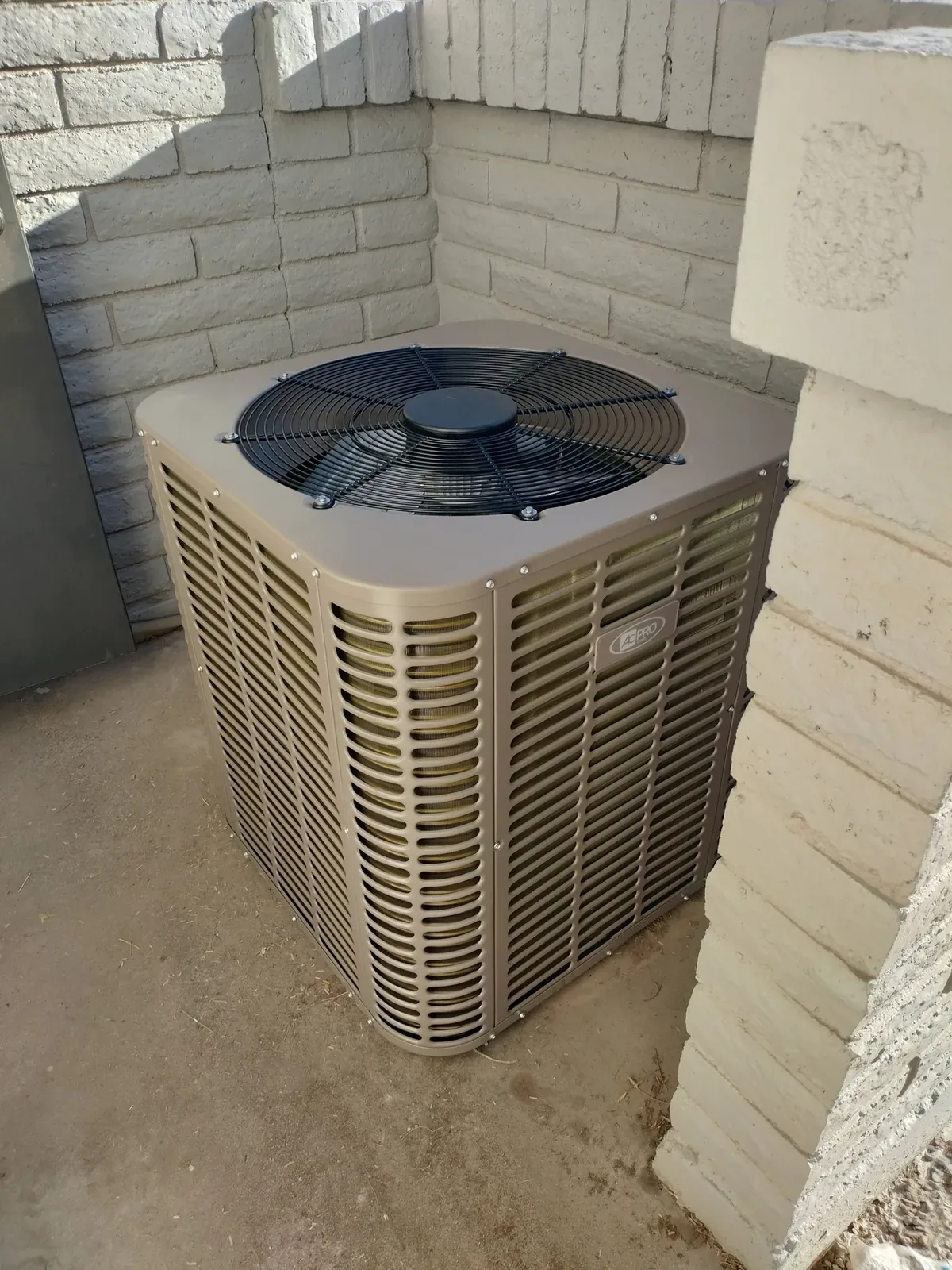
SEER2 is the efficiency rating on new equipment. Higher SEER2 means more cooling per watt, which in plain terms means a lower summer bill. For a home that runs AC roughly half the year, that number matters more here than almost anywhere.
The Southwest has its own regional minimum. For split systems under 45,000 BTU the floor is 14.3 SEER2, and at or above that capacity it's 13.8 SEER2. You can install standard-efficiency equipment that meets those minimums, or step up to a higher-SEER2 system. There's also EER2, which measures efficiency at peak heat, and in a 112F valley EER2 is worth paying attention to because it reflects how the unit performs when you need it most, not just on an average day.
The tradeoff is straightforward. Higher SEER2 costs more up front and pays you back on the monthly bill over the years you own it. For a Phoenix home with heavy summer runtime, a modest step up in efficiency often makes sense. We walk through the math for your actual usage instead of pushing the most expensive box on the truck.
If you've heard the industry is changing refrigerants, here's the short version. R-410A has been phased out for new equipment. Manufacturers stopped building R-410A systems as of January 1, 2025, and new installs now use a low-GWP refrigerant. The most common replacement is R-454B.
The reason for the change is GWP, global warming potential, and R-454B comes in around 466 versus roughly 2,088 for R-410A. That's a large environmental reduction. R-454B is classified A2L, which means mildly flammable, so new equipment is built with added safety features like refrigerant leak detection. It's well-proven and safe when installed by a tech who knows the equipment.
Two things homeowners should know. First, you do not have to rip out a working R-410A system because of this. If your unit is healthy, keep running it and keep it serviced. Second, when you do replace, a new system today comes charged with R-454B, and the outdoor condenser has to be matched to a compatible indoor coil. You can't just bolt a new condenser onto an old mismatched coil and expect it to perform or stay under warranty. On this Glendale job we installed A2L-ready equipment, which is the standard we're already set up for on every replacement.
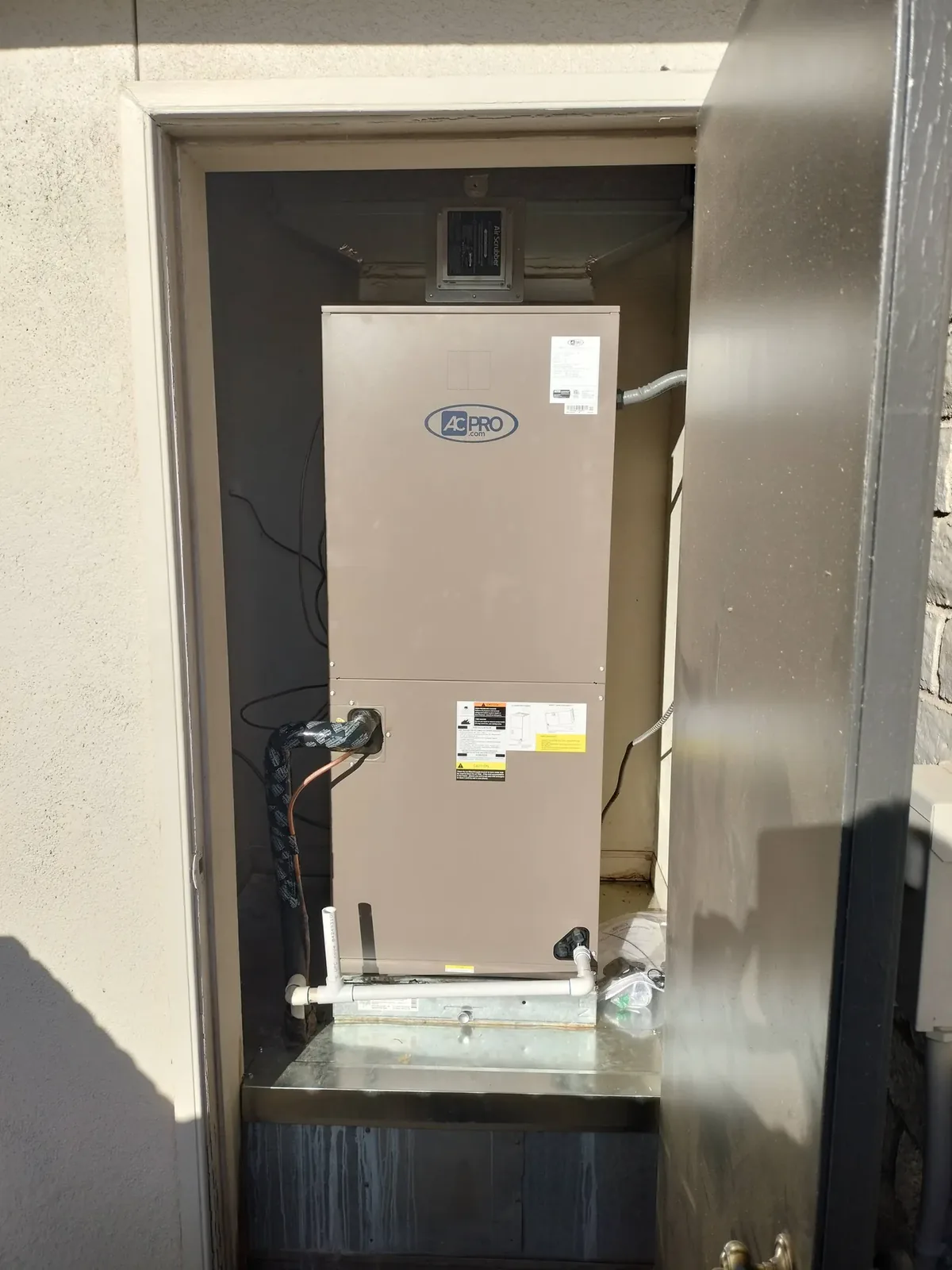
A clean central AC replacement is a sequence, and skipping steps is how you end up with a system that doesn't charge right or fails early. Here's how this one went, and how we do them all.
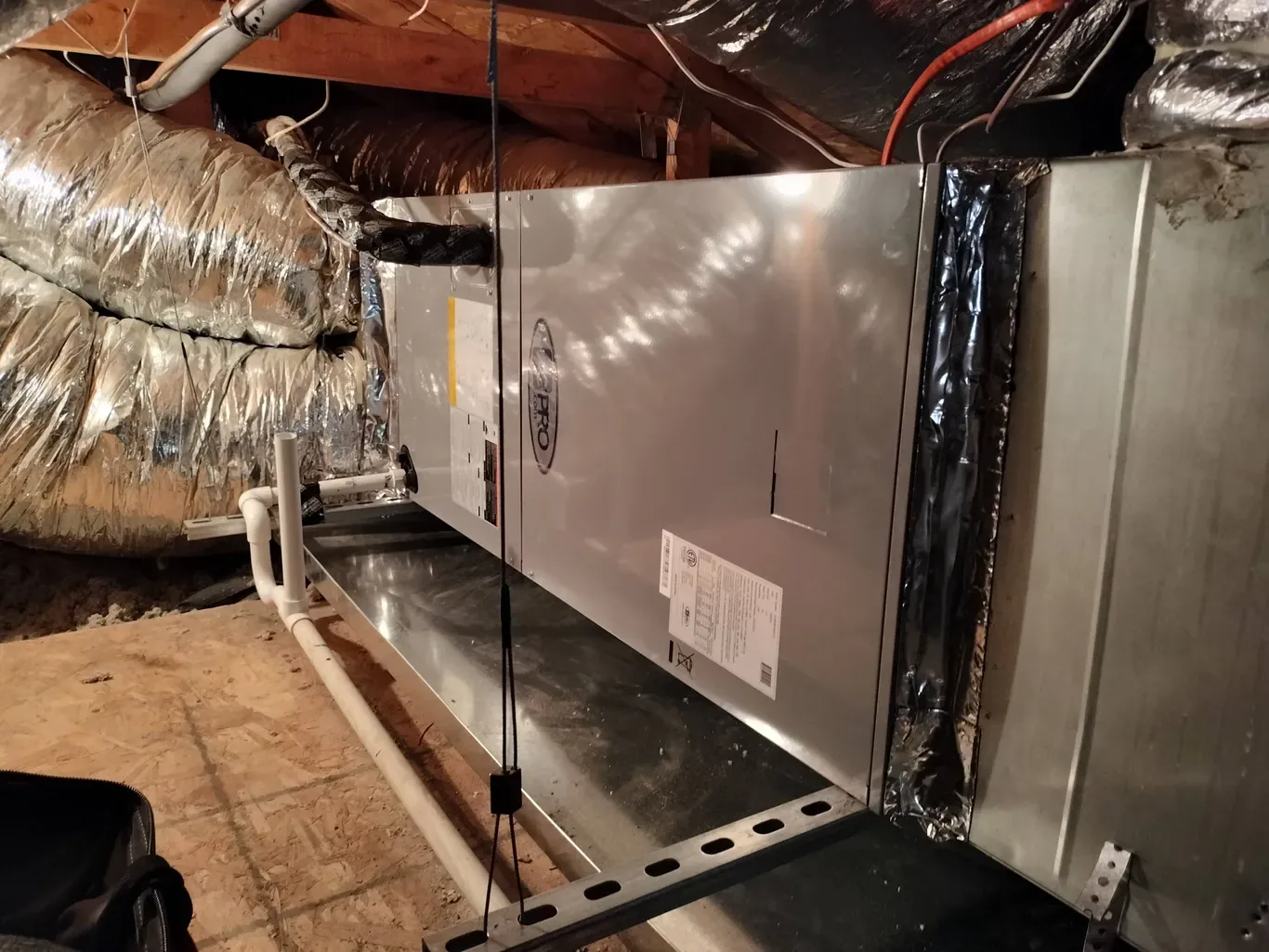
We document the before, in-progress, and after on jobs like this. You can see real installs in our project photo gallery, including condensers, coils, and attic air handlers.
Money matters, so let's be straight about it. A complete split-system replacement in the Phoenix metro typically runs around $9,000 to $13,000 installed. The full range stretches roughly $6,500 to $18,000 and up, depending on tonnage, the SEER2 level you choose, the condition of your ductwork, and any electrical or code upgrades the job needs.
This Glendale job landed in that typical band. What set the number was the tonnage the load calc called for, a matched coil to go with the new A2L condenser, and a straightforward install that didn't require major duct or electrical rework. Homes that need new ductwork, a panel or circuit upgrade, or a high-efficiency system will sit higher in the range.
We don't quote a flat price sight unseen, because an honest number depends on your home. The estimate is free, and we're known for beating other bids without cutting corners. If you want to know where your house lands, reach out for a free estimate and we'll put real numbers on paper.
By that evening, the Glendale house was cooling again, this time with a quiet, right-sized system holding setpoint without running itself ragged. The homeowner got even temperatures room to room, a unit that's far easier on the electric bill, and a system built for the A2L refrigerant standard so it isn't dated the day it goes in. Best of all, they got peace of mind heading into monsoon season instead of crossing their fingers every afternoon.
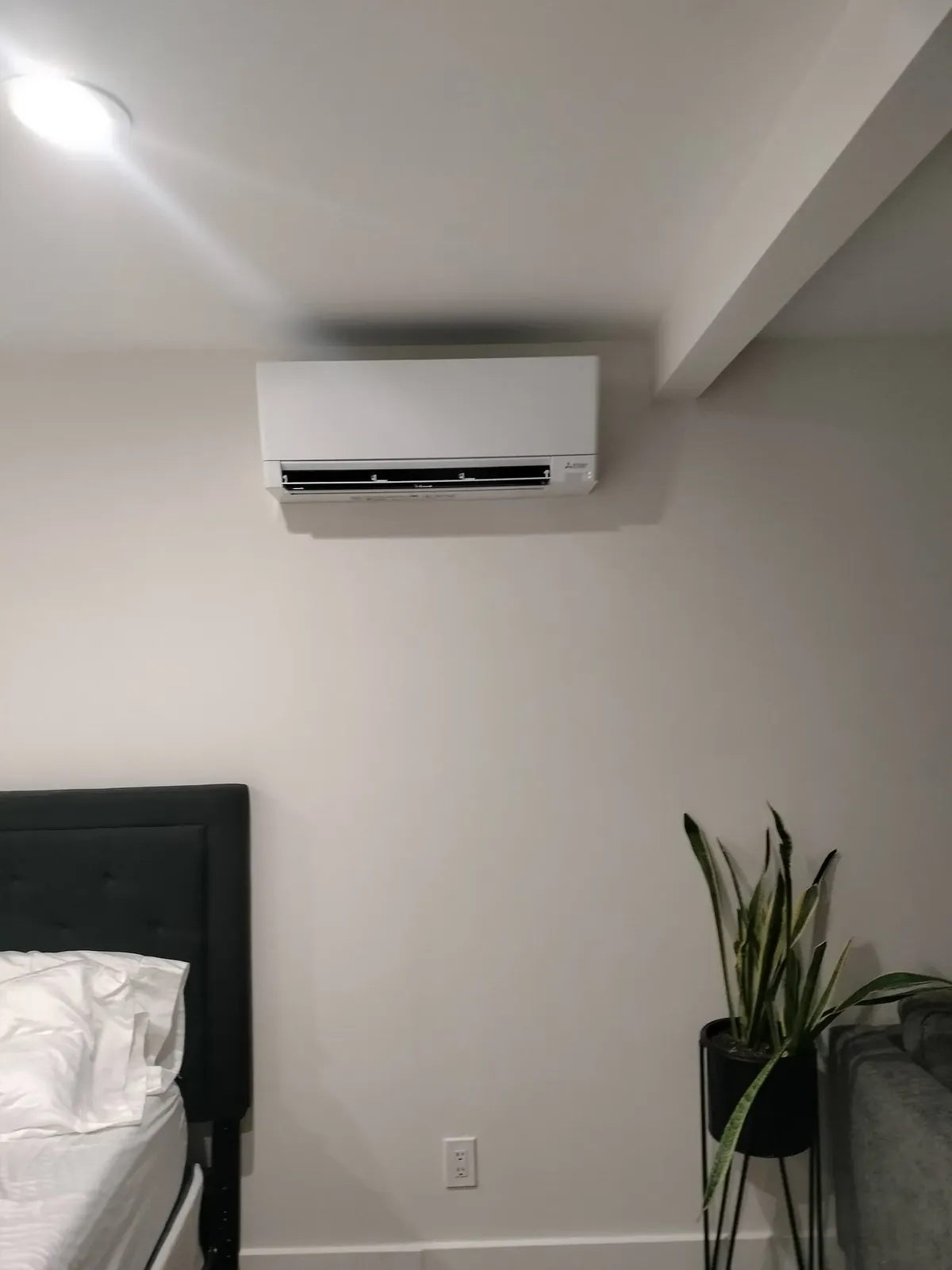
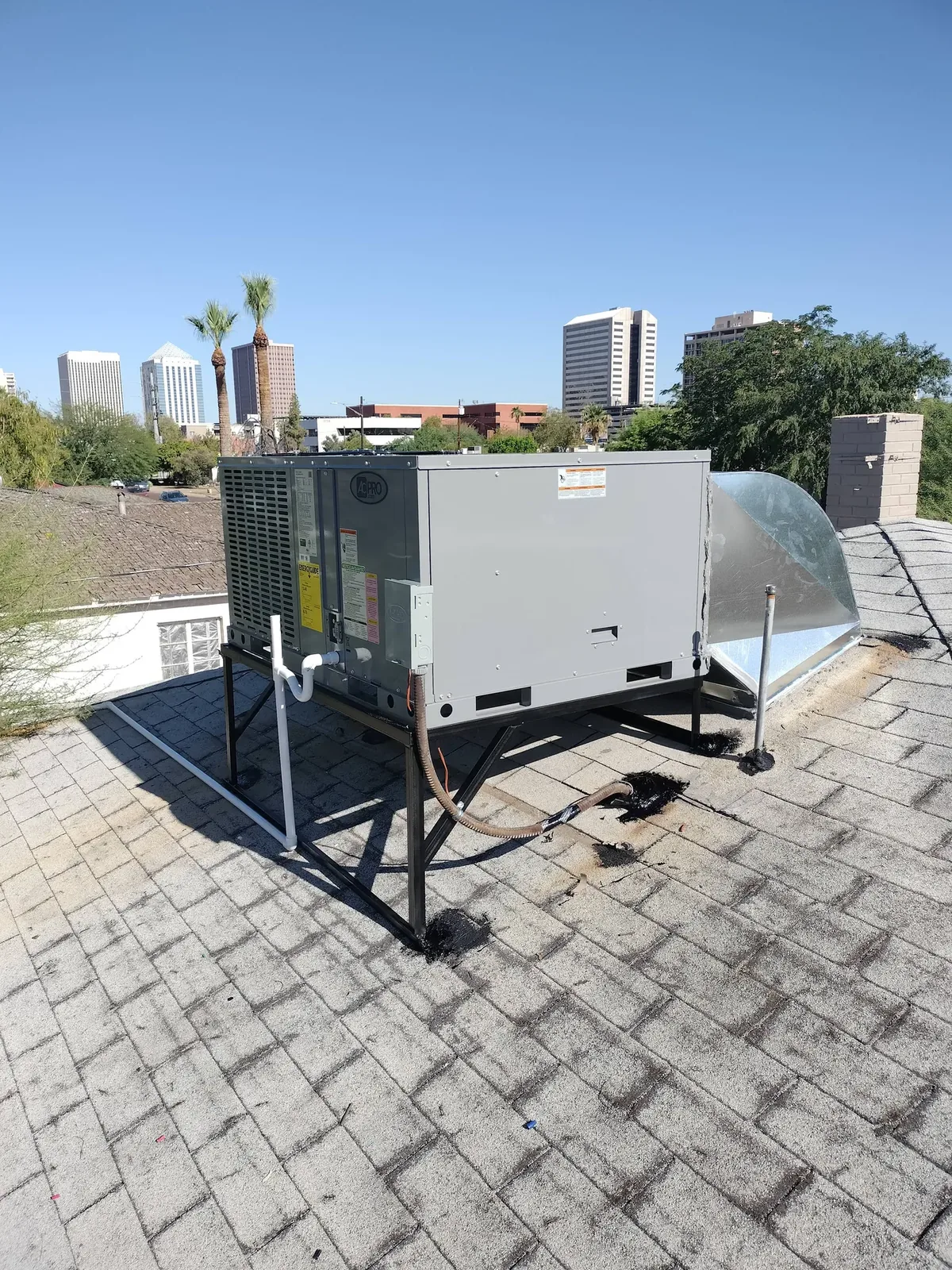
If your central AC is showing the warning signs above, or you just want a straight answer on repair versus replace before the next heat wave, we're glad to take a look. We also handle ductless mini-split installations for additions and tough-to-cool rooms, and rooftop packaged unit replacements for homes built around that setup. Call or text Alex at 480-853-6627, or send us a note through our contact page for a free estimate. Desert Cool Mechanical is a family-owned, licensed-bonded-insured contractor (AZ ROC #343485), BBB A+ accredited, serving Glendale, Phoenix, Peoria, Surprise, Sun City, Avondale, Goodyear, Scottsdale, Tempe, Mesa, Chandler, and Gilbert.
Weigh the unit's age, the repair cost, and the pattern of problems. If it's 10 to 15+ years old, the repair runs more than roughly 30 to 50 percent of a new system, it uses R-22 or has a failing compressor, or you've had repeat breakdowns and rising bills, replacement usually makes more sense. If it's a younger system with a single failed part, a repair is often the right call. We'll give you both options honestly and let you decide.
This Glendale job landed in the typical band of about $9,000 to $13,000 installed for a complete split-system replacement. Across the Phoenix metro the full range runs roughly $6,500 to $18,000 and up depending on tonnage, SEER2, ductwork condition, and any electrical or code upgrades. We don't quote a flat price sight unseen because an honest number depends on your home, and the estimate is free.
Bigger is not better here. The right size comes from a Manual J load calculation that accounts for square footage, insulation, windows, sun exposure, and ductwork. Most Arizona homes fall somewhere in the 1.5 to 5 ton range, but only the load calc tells you the correct size for your house. An oversized unit short-cycles, cools unevenly, controls humidity poorly, and wears out faster.
The Southwest regional minimum for split systems is 14.3 SEER2 under 45,000 BTU and 13.8 SEER2 at or above that. You can install standard-efficiency equipment that meets the minimum or step up to higher SEER2 for a lower summer bill. Because Phoenix homes run AC about half the year, and because EER2 (efficiency at peak heat) matters in a 112F valley, a modest efficiency upgrade often pays back over time. We'll run the math for your actual usage.
R-454B is the low-GWP refrigerant now used in new equipment after R-410A was phased out for new manufacture as of January 1, 2025. Its GWP is around 466 versus roughly 2,088 for R-410A. It's classified A2L (mildly flammable), so new systems include safety features like leak detection. You do not have to replace a working R-410A system. When you do replace, the new system comes with R-454B and needs a matched indoor coil.
A standard split-system replacement is typically a one-day job, recover to startup, like this Glendale install. Jobs with new ductwork or electrical work can run longer. We know a dead AC in 110F+ heat is urgent, so we move quickly on summer calls. Call or text 480-853-6627 and we'll get you scheduled as fast as we can.
Not on a new R-454B system. The outdoor condenser has to be matched to a compatible indoor coil for the system to perform correctly and keep its warranty, and a new A2L unit won't pair with an old mismatched coil. Mismatched equipment cools poorly and fails early. We install matched systems, condenser and coil together, so it runs to spec.
We're based in Glendale and serve the Phoenix metro, including Phoenix, Peoria, Surprise, Sun City, Avondale, Goodyear, Scottsdale, Tempe, Mesa, Chandler, and Gilbert. Reach out through our contact page or call 480-853-6627 for a free estimate anywhere in our service area.
Get a free, no-pressure estimate from a licensed local HVAC contractor. Call or text and we'll get you scheduled fast.